
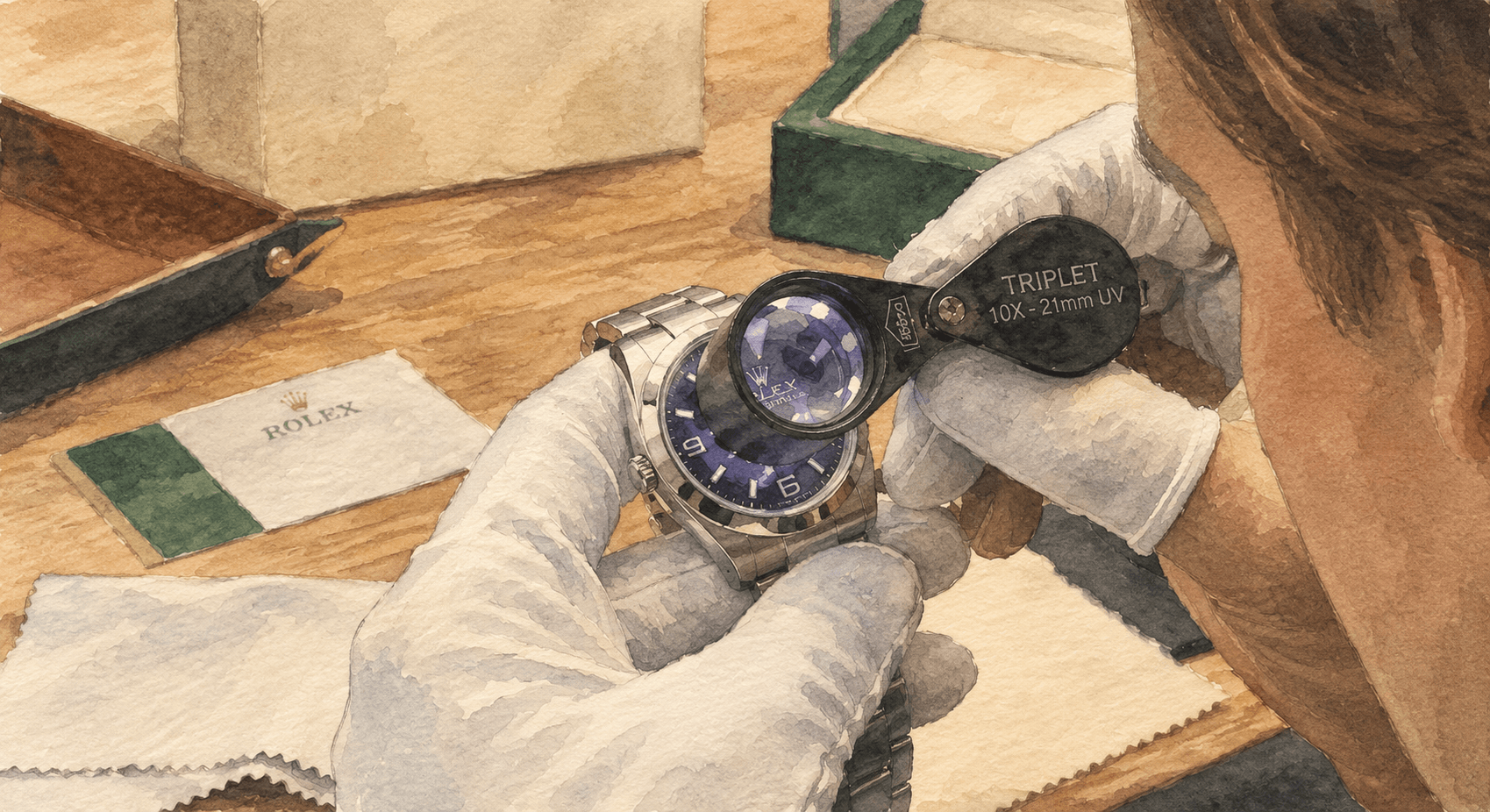
What to look for before you buy
A loupe reveals what a first glance can miss. The key details to examine in a pre-owned watch.
Buying Guide3 min read
Ask a seasoned collector to show you their watches and you will rarely see a neat row of the most talked-about references. You’ll see a gold dress watch inherited from a grandfather, a chronograph bought to mark a promotion, a small independent piece most people have never heard of, and a steel sports watch with a scratch on the clasp that they refuse to have polished. Each one comes with a story, and none of them was bought to complete a set.
That’s what character looks like in a collection. It isn’t about how much you spend or how many pieces you own. It’s about choices that only make sense together because one person made them, over time, for their own reasons.
We see the opposite every week in our Dubai showroom too: boxes full of excellent watches that say almost nothing about their owner. Three steel sports models with blue dials. Two chronographs that do the same job. Pieces bought because the queue was long, then left in the safe because they never quite felt right. There’s nothing wrong with any of those watches. The collection just doesn’t add up to anything.
Buy the watch, not the hype
Waiting-list references are easy to justify. They hold their value, everyone recognises them, and getting one feels like an achievement. But a watch bought for the queue tends to stay a trophy. You check on it more than you wear it.
A better starting point is your own wrist. Think about the watch you reach for most, and why. If it’s a steel sports watch you wear to the office, on weekends and on holiday, a second one in a different colour rarely adds much. What changes your collection is a watch that does something your current pieces can’t: a thin dress watch for evenings, a chronograph with real presence, or something from a smaller maker that nobody at dinner will recognise.
One of our clients came in last year asking for a third steel sports model. After an hour of trying things on, he left with a 1960s gold Calatrava instead. He says it’s the watch he gets asked about most, and the only one his daughter has already claimed.
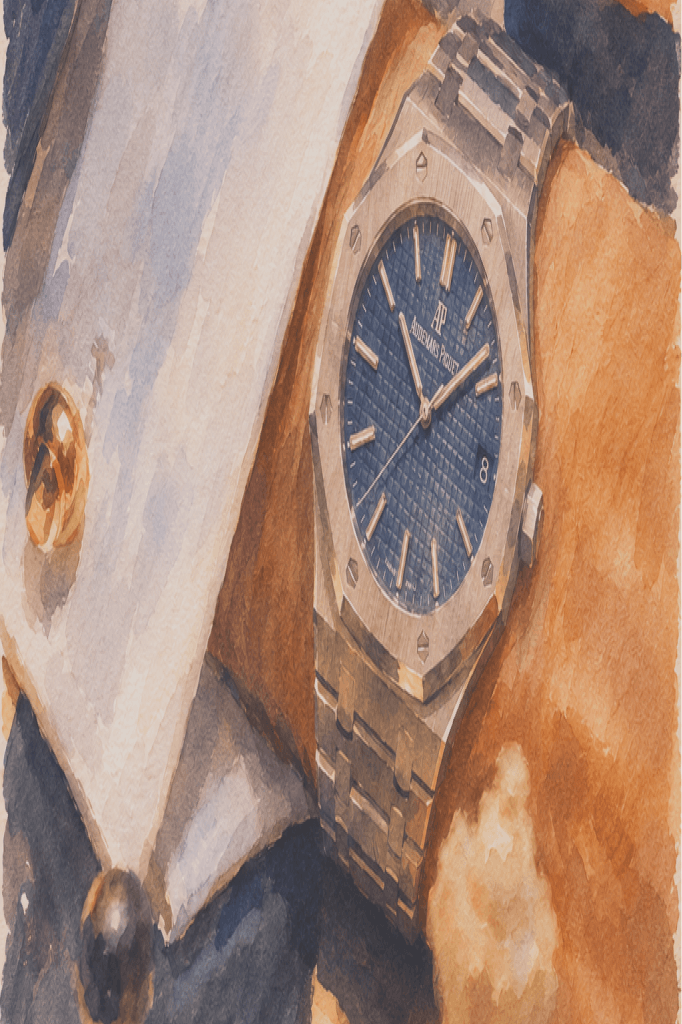
Mix eras on purpose
Vintage watches bring things modern ones simply can’t: patina, smaller and more delicate proportions, and a history you can sometimes trace back to the original owner. A watch from the 1970s next to one from last year makes both look more interesting. The contrast is the point.
Vintage also asks more of you as a buyer. Originality matters far more than shine. A dial that has aged evenly is worth considerably more than one that has been refinished to look new, and replacement hands or a service crown can quietly take a large share off a watch’s value. The best vintage pieces are the honest ones, even if they look a little tired.
What to ask about a vintage piece
 Is the dial original, or has it been restored or relumed?
- Are the hands, crown and bezel correct for the period?
- When was it last serviced, and by whom?
- Is there any paperwork, even partial, that ties it to its history?
A good dealer should answer all four without hesitating, and show you, not just tell you. If the answers are vague, walk away. There will always be another example.
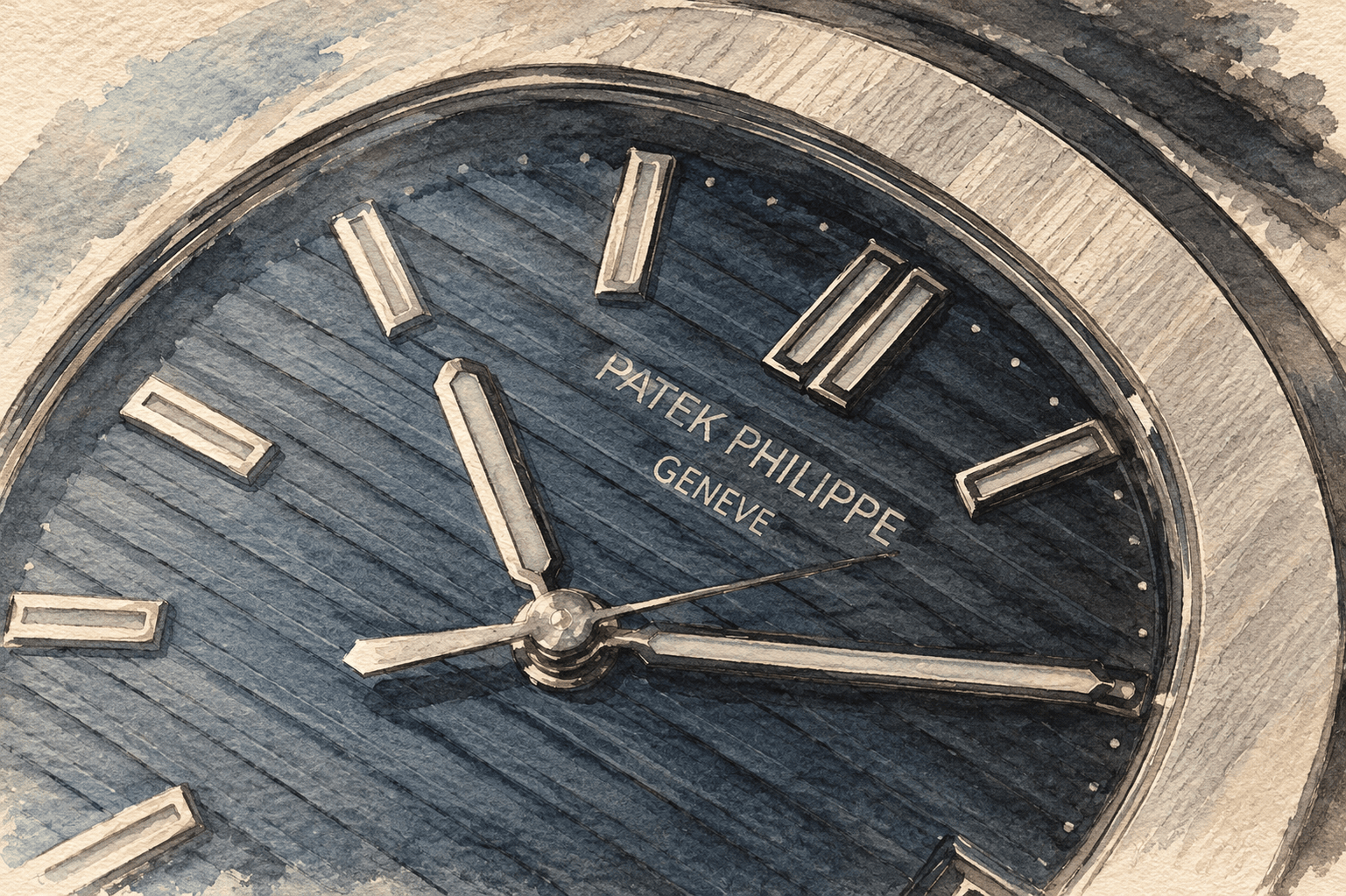
The watch people ask about is rarely the one everyone else is waiting for.
Let the story count
Provenance is one of the most underrated parts of collecting. A watch with its original receipt, a handwritten service booklet or a known first owner carries something that a brand-new piece can’t. It also tends to hold its value better, because the next buyer gets the story along with the watch.
The same goes for your own history with a piece. The watch you bought when your first child was born, or the one you wore to sign your first big deal, will mean more to you than any limited edition. Write those moments down and keep them with the box. One day they’ll be part of someone else’s story too.
I don’t remember what I paid for most of my watches. I remember exactly where I was when I bought every one of them.
Take your time
The most interesting collections are rarely built quickly. Their owners waited for the right example in the right condition, and they walked away from the rest, sometimes more than once. It’s frustrating in the moment, but it’s the reason their boxes look the way they do.
A clear brief makes waiting much easier. Know the reference you want, the year range you’d accept and the condition you won’t go below. Once you’ve written that down, it becomes far easier to say no to a watch that’s almost right, because you know exactly what you’re holding out for.
And wear them
This is the simplest advice, and the one most often ignored. Watches are made to be worn. A scratch on the clasp or a little wear on the bracelet doesn’t take away from a collection. It’s evidence that the watches have actually lived with you.
Rotate through them. Take the dress watch out on a Tuesday. Wear the vintage piece on a weekend away. A watch that never leaves the box isn’t adding character to anything, least of all your collection.